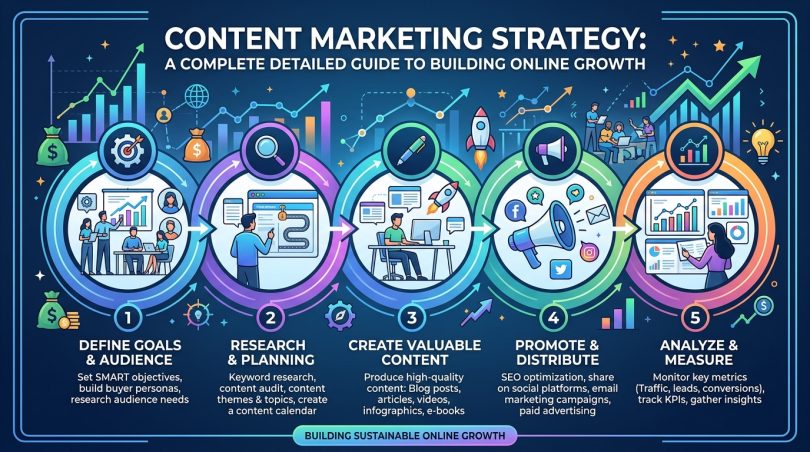

A content marketing strategy is a planned approach to creating, publishing, and distributing valuable content to attract and engage a target audience. In the digital world, businesses cannot rely only on advertisements; they need meaningful content that builds trust and long-term relationships with customers.
Content marketing is not just about writing blogs or posting on social media. It is a structured system that helps brands educate their audience, solve problems, and ultimately convert readers into loyal customers. A strong strategy ensures consistency, direction, and measurable results.
What is Content Marketing Strategy?
A content marketing strategy is a roadmap that defines how a business will use content to achieve its marketing goals. It includes planning what type of content to create, who the target audience is, and which platforms to use for distribution.
Instead of creating random content, a strategy ensures every piece of content has a purpose. Whether it is increasing traffic, generating leads, or building brand awareness, each content effort is aligned with a specific goal.
Importance of Content Marketing Strategy
Having a content marketing strategy is important because it provides clarity and direction. Without a plan, businesses may waste time creating content that does not bring results. A strategy helps focus efforts on what truly matters.
It also helps build trust with the audience. When people consistently see useful and high-quality content, they begin to trust the brand. Over time, this trust leads to stronger customer relationships and better business growth.
Understanding Your Target Audience
The first step in any content marketing strategy is understanding the target audience. Businesses need to know who they are speaking to, what problems they face, and what solutions they are looking for.
Creating audience personas helps in this process. These personas represent ideal customers and include details like age, interests, behavior, and online habits. This makes it easier to create content that connects with the right people.
Setting Clear Goals and Objectives
A successful content strategy always starts with clear goals. These goals may include increasing website traffic, improving brand awareness, generating leads, or boosting sales.
When goals are defined, it becomes easier to measure success. For example, if the goal is traffic growth, then metrics like page views and clicks can be tracked. Clear objectives help keep the strategy focused and effective.
Types of Content in Marketing Strategy
Content marketing includes different types of content such as blog posts, videos, social media posts, infographics, podcasts, and email newsletters. Each type serves a different purpose and audience preference.
Blogs are useful for SEO and education, while videos are great for engagement. Social media content helps with brand visibility, and emails are effective for direct communication. A balanced mix of content types works best.
Content Creation Process
Creating high-quality content requires research, planning, and creativity. The process starts with keyword research and topic selection based on audience needs and search trends.
After selecting a topic, content is written in a structured and engaging way. It should be easy to read, informative, and valuable. Adding visuals and examples can make the content more interesting and effective.
Content Distribution Channels
Creating content is not enough; it must be distributed properly. Common distribution channels include websites, social media platforms, email marketing, and search engines.
Each platform has its own audience and style. For example, LinkedIn is more professional, while Instagram focuses on visuals. Choosing the right channels ensures content reaches the right people at the right time.
SEO in Content Marketing Strategy
Search Engine Optimization (SEO) plays a major role in content marketing. It helps content appear in search engine results, increasing visibility and organic traffic.
Using relevant keywords, writing quality content, and optimizing titles and descriptions are important SEO practices. Good SEO ensures that content reaches a wider audience without paid advertising.
Measuring Performance and Results
A content marketing strategy must include performance tracking. Businesses need to measure how well their content is performing using analytics tools.
Key metrics include website traffic, engagement rate, conversion rate, and social shares. Analyzing these results helps improve future content and make better decisions.
Common Challenges in Content Marketing
One major challenge in content marketing is maintaining consistency. Many businesses start strong but struggle to produce regular content over time.
Another challenge is competition. With so much content available online, standing out becomes difficult. Creating unique, high-quality, and valuable content is essential to overcome this challenge.
Future of Content Marketing Strategy
The future of content marketing is becoming more personalized and technology-driven. Artificial intelligence and automation tools are making it easier to create and distribute content efficiently.
Video content, interactive content, and voice search optimization are also becoming more important. Businesses that adapt to these changes will have a stronger competitive advantage.
Conclusion
A content marketing strategy is essential for any business that wants to grow in the digital world. It provides structure, direction, and purpose to content creation efforts.
By understanding the audience, setting clear goals, creating valuable content, and measuring performance, businesses can build strong online visibility and long-term success. A well-planned strategy not only attracts customers but also builds trust and brand authority over time.