

You Do Not Need a Content Department. You Need a Question List and Four Hours.
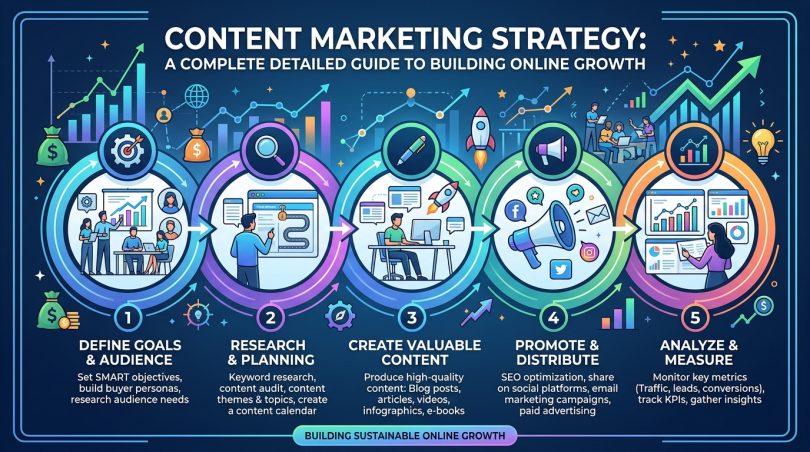
Small businesses drown in content advice written for companies with marketing teams: daily posts, video studios, brand guidelines. The reality: content marketing for small business works at a completely different scale — one useful piece a week, built from the questions your customers already ask you, repurposed ruthlessly, and measured by enquiries rather than applause. This guide builds that system end to end: mining your daily work for topics that pre-sell your expertise, producing one strong piece in a single sitting, multiplying it into a week of presence, and tracking the only numbers that justify the hours. Four hours a week is the budget; the system below is designed to fit inside it permanently, not heroically.
The Customer-Question Engine: Topics That Arrive Pre-Sold
Your customers hand you your content calendar every day — in emails, on calls, at the counter. Every repeated question is a piece of content your market has literally requested, and answering it publicly does triple duty: it ranks for the exact phrases buyers search, it pre-answers objections before sales conversations, and it demonstrates expertise instead of claiming it. Keep a running note — phone, notebook, shared doc — and log questions verbatim as they occur: pricing confusion, comparison questions (“you vs the cheap option”), process fears, maintenance worries. Within a month the list holds twenty topics, each with a ready-made title in the customer’s own words. Prioritise ruthlessly: questions asked by people closest to buying go first; curiosity content can wait. This engine never runs dry, because it is fed by the business itself — market research disguised as publishing, and the strongest possible answer to the blank-page problem that kills most small-business blogs by week three.
Production: One Strong Piece, One Sitting
The weekly rhythm is a single block — ninety minutes to two hours — producing ONE substantial piece: a guide, a comparison, a how-to, a story of a job done well (with permission), answering one logged question completely. Write it the way you’d explain it to the customer across the desk: plain structure, subheadings, your real numbers and examples where shareable, one clear next step at the end. Half of small-business content fails by being generic — industry platitudes that any competitor could sign — so include the specifics only you know: your process, your locality, your turnaround, your mistakes and what they taught. Those details are the moat. Search engines increasingly reward exactly this first-hand texture, and customers reward it faster: the article that sounds like a person who does the work outsells the one that sounds like a brochure, every week of the year.
Repurposing: One Piece, Four Formats, Thirty Minutes
The remaining time budget multiplies the piece rather than making new ones. Format two: the core answer becomes a short video or photo post for your social channel — you, talking to camera, the way you’d answer the customer; authenticity beats production value at this scale decisively. Format three: the piece’s sharpest two or three points become standalone short posts across the week, each linking back to the full piece. Format four: the month’s four pieces become one email to your list — the channel you own outright, immune to algorithm weather. Old pieces join the rotation too: update the best performers quarterly with fresh examples, because an improving archive compounds — last year’s answer, refreshed, keeps ranking and keeps selling. This is the actual arithmetic of small-scale content: not more hours, but more surfaces per hour spent, sustained for the quarters it takes compounding to show.
Measurement: Enquiries, Not Applause
Likes are not a metric a small business can bank. Track instead: enquiries that mention content (“I read your guide about…”), search rankings for your question-titles, email replies, and the pages visitors view before contacting you — your analytics will show the pattern within a quarter. Double down on the two or three topics that generate conversations, and let the silent ones rest without guilt; content portfolios behave like product lines, with a minority carrying the revenue. Set the review quarterly, not weekly: content marketing’s lag is real (expect meaningful signal at 90 days, compounding after), and weekly judgement kills good systems in their infancy. Pair the publishing habit with the discipline of testing demand before spending — the same instinct our companion guide on how to validate a business idea applies to new offers — and your marketing becomes what it should be: a measured business asset, not a hope with a login.
The First Month, Scheduled
Week one: start the question log and pick the four strongest questions; set up or clean the one page on your site where pieces will live. Week two: publish piece one and its repurposed formats; note every comment and question it raises — they are next month’s log entries. Week three: piece two, plus one update to an old page if one exists. Week four: piece three, the monthly email assembled from the month’s pieces, and a fifteen-minute review of enquiries and rankings. Total time: roughly sixteen hours for the month, after which the rhythm — log, answer, multiply, review — simply repeats. The calendar is deliberately unambitious; a system you can run in your busiest month is the only kind that survives to compound.
The Bottom Line
Content marketing for small business: log customer questions, answer one completely each week in a single sitting, repurpose it into four formats, and judge the system quarterly by enquiries. Four hours a week, sustained, beats forty hours once — because content compounds, and compounding only pays those who stay in the game.