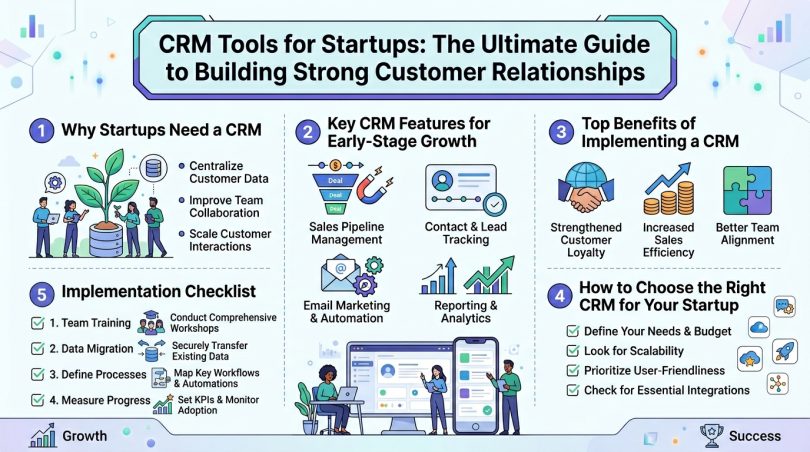

Customer Relationship Management (CRM) has become one of the most important systems for modern startups. In the early stages of a business, managing customers, leads, and sales manually can quickly become overwhelming. This is where CRM tools help by organizing customer data, tracking interactions, and improving communication.
A strong CRM system allows startups to build better relationships with customers, increase sales efficiency, and scale faster. Instead of relying on scattered spreadsheets or manual notes, businesses can use CRM tools to create a structured and automated approach to customer management.
What is a CRM Tool?
A CRM tool is software designed to help businesses manage customer relationships in an organized way. It stores customer information, tracks interactions, and helps businesses understand customer behavior.
For startups, CRM tools act like a central hub where all customer-related data is stored. This includes contact details, purchase history, communication records, and sales pipeline information, making it easier to manage and grow customer relationships.
Why CRM is Important for Startups
Startups often face challenges such as limited resources, small teams, and rapid growth. In such situations, managing customers manually becomes inefficient. CRM tools solve this problem by automating many tasks.
They help startups save time, improve customer service, and reduce errors. More importantly, they allow businesses to focus on growth instead of spending time on repetitive administrative work.
Key Features of CRM Tools
Most CRM tools offer a range of features designed to simplify customer management. These include contact management, lead tracking, sales pipeline management, and communication tracking.
Some advanced CRM systems also include automation features, reporting dashboards, email integration, and AI-based insights. These features help startups make better decisions based on real customer data.
How CRM Tools Help in Customer Management
CRM tools allow startups to organize all customer information in one place. This makes it easier to track every interaction, from the first contact to final purchase.
By having a complete view of customer history, businesses can provide more personalized service. This improves customer satisfaction and increases the chances of repeat business.
Improving Sales Efficiency with CRM
One of the biggest advantages of CRM tools is improved sales management. Startups can track leads, monitor sales progress, and identify potential customers more effectively.
Sales teams can prioritize high-value leads and follow up at the right time. This structured approach increases conversion rates and helps businesses close deals faster.
Automation and Time Saving
CRM tools reduce manual work by automating repetitive tasks. For example, they can automatically send follow-up emails, schedule reminders, and update customer records.
This automation saves time and allows startup teams to focus on more important tasks like strategy, marketing, and product development. It also reduces the risk of human error.
Better Communication and Collaboration
CRM systems improve communication within teams by providing a shared platform for customer data. Everyone in the team can access the same information, which reduces confusion and miscommunication.
This is especially useful for startups where multiple team members handle sales and customer support. It ensures that everyone is aligned and working toward the same goals.
Data-Driven Decision Making
CRM tools provide valuable insights through reports and analytics. Startups can track sales performance, customer behavior, and marketing effectiveness using this data.
These insights help businesses make informed decisions instead of guessing. Data-driven strategies improve efficiency and increase the chances of success.
Popular CRM Tools for Startups
There are many CRM tools available in the market that are suitable for startups. Some popular options include HubSpot CRM, Zoho CRM, Salesforce, and Pipedrive.
Each tool offers different features and pricing plans, so startups can choose based on their budget and requirements. Many CRM tools also offer free versions, which are ideal for beginners.
Challenges in Using CRM Tools
Although CRM tools are highly beneficial, startups may face some challenges while using them. One common issue is the learning curve, especially for teams that are new to CRM systems.
Another challenge is proper implementation. If CRM tools are not used correctly, they may not deliver expected results. Training and proper setup are important for success.
Future of CRM in Startups
The future of CRM tools is becoming more advanced with the integration of artificial intelligence and automation. AI-powered CRM systems can predict customer behavior and suggest actions to improve sales.
Mobile CRM solutions are also growing, allowing teams to manage customers from anywhere. This flexibility is especially useful for startups with remote or hybrid teams.
Conclusion
CRM tools are essential for startups that want to build strong customer relationships and grow efficiently. They help organize data, improve communication, and increase sales productivity.
By using the right CRM system, startups can save time, reduce manual work, and make better business decisions. In today’s competitive market, a good CRM tool is not just an option but a necessity for long-term success.